
Reflections from a practicing psychiatrist and Christian
There is a reasonable skepticism amongst Christians regarding psychiatric medication.
1. Will taking medication change my soul?
2. Is medicine the easy way out, just go numb?
3. Shouldn’t I bear the cross that is given to me?
These are heavy and enduring questions that have prevented Christians from seeking medication treatment since it became an option. Combine these concerns with the developing mistrust of our medical industrial complex and the barrier to sometimes necessary care can be hard to overcome.
Let's take a step back from these valid concerns and think about how the body and mind affect one another. Did you know that inflammation can cause depression and that people with high inflammation often have depression? Which happens first? Oftentimes it is both! Depression can lead to low energy, which contributes to inactivity and poor diet; these, in turn, increase inflammation, further worsening depression. This is a “positive” feedback loop.
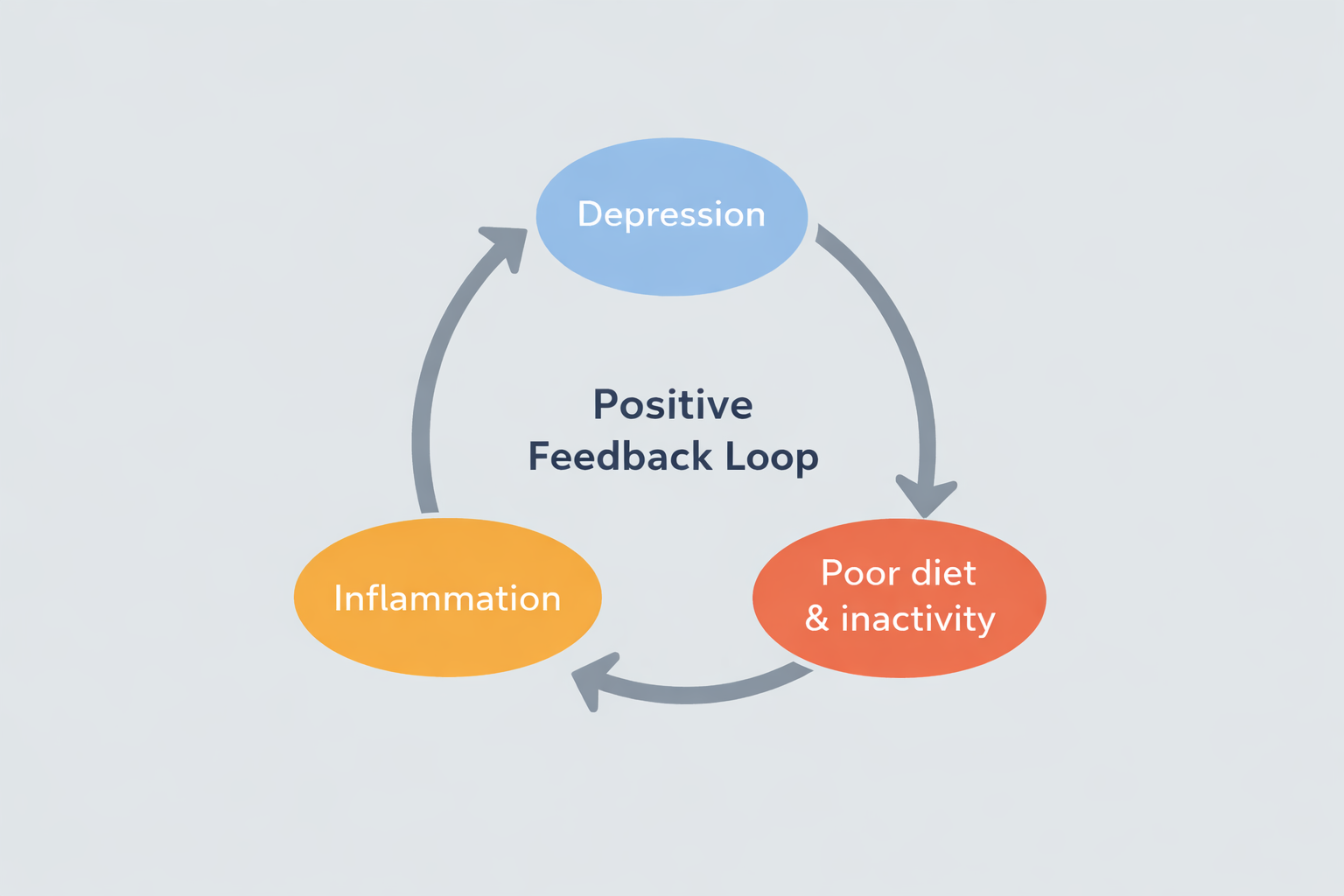
Positive feedback loops occur when output amplifies its own input. A classic example is a microphone squeaking when you put it up to a speaker. Positive feedback loops can get you to a place you never expected (the loud screech!) and require meaningful action to stop (get that microphone away from the speaker!). Mental, spiritual and physical health are no different.
I’ve encountered patients, oftentimes with a history of trauma, that have so much anxiety that they cannot participate meaningfully in therapy! I’ve had patients who were too depressed to make the lifestyle changes needed to improve their depression! Here we see the “positive” feedback loop keeping a person in suffering. While there are multiple ways of reversing this course, psychiatric medication can be meaningfully helpful.
Many things affect mental health in a secondary way. Let's say you eat because you are hungry. The quality of the food you eat will affect your mood and energy level. Let's say you scroll on a social media feed, the duration and type of content will affect your mood. The primary reason you look at the feed may be boredom but there are secondary effects to mental health.
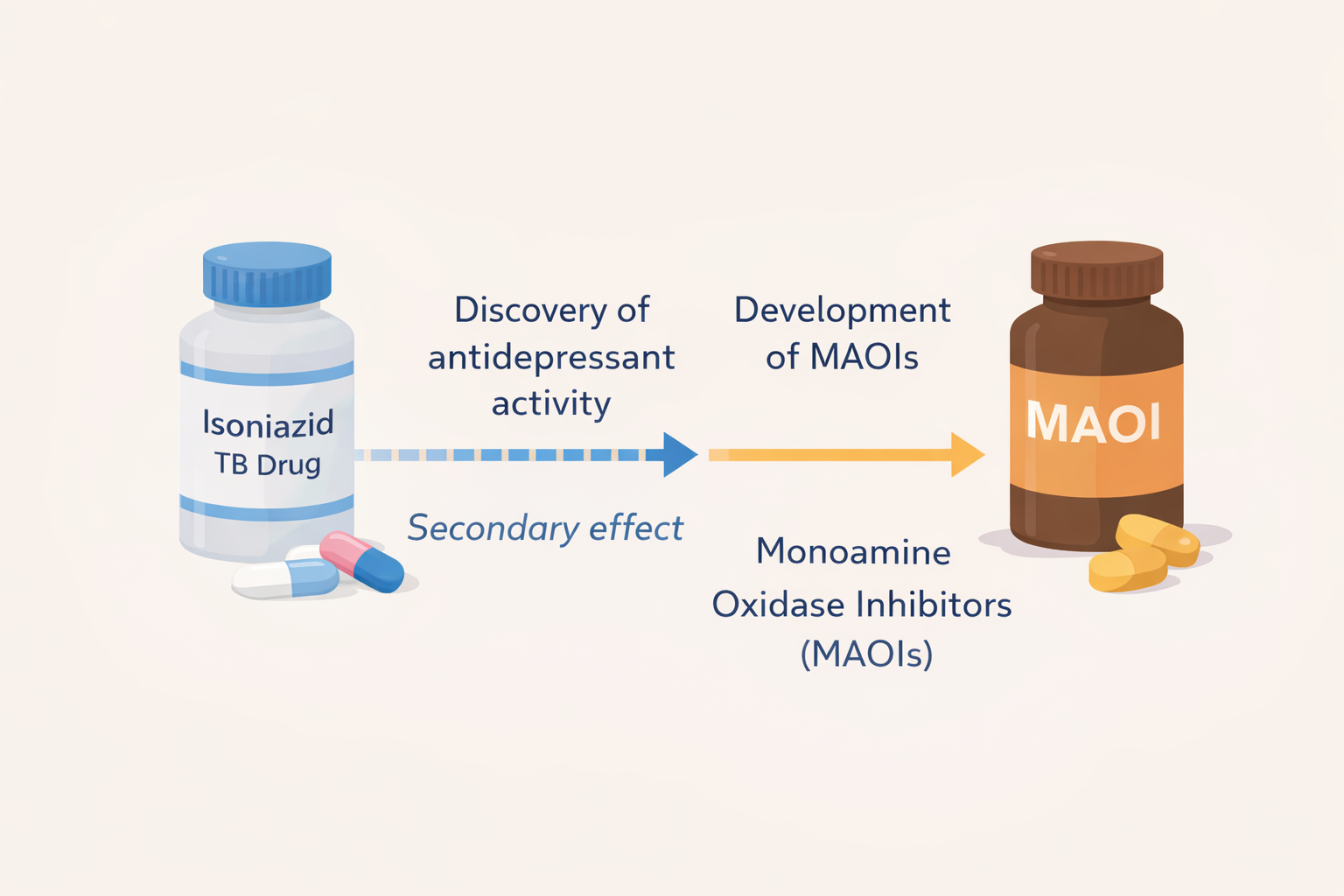
Antidepressants were discovered as a secondary effect. Isoniazid is an antibiotic that was found to significantly boost mood in patients receiving it for the treatment of tuberculosis. Imagine a hospital ward with malaised sickly persons when suddenly some patients became bright and cheery! Isoniazid has “MAOI” properties and the discovery of this class of medication preceded our current antidepressants.
When many behaviors affect our mood, affect our soul, why is it that we seem to ask those questions more frequently when it comes to psychiatric medications? Is it because the “primary” effect of psychiatric medication is to change us? Well so does everything else. And maybe we need to consider our mental health and soul more often with other decisions.
So then psychiatric medication can be seen as a tool. A tool that when used appropriately can have profound effects on a person's life. But they must be used judiciously and not in place of proper discernment.
Discerning the use of psychiatric medications starts with assessing for symptom cause, not jumping to symptom management. Looking at multiple domains including physical, spiritual, and social wellbeing. Ordering what is disordered. When a person is using marijuana or drinking or scrolling all day, the “mental health symptoms” are there to tell us that something needs to change! The last thing we should do is treat the downstream effects of maladaptive behavior without trying to fix it. Or if someone has a medical problem such as anemia or thyroid disorder, treating the energy level symptom would just mask the underlying pathology.
There are times though when everything seems mostly ordered and yet functionally a person is struggling. Genetics, trauma, or substance use – sometimes these push a person so far into the positive feedback loop of mental illness that they can’t engage in talk therapy and lifestyle changes. The velocity is too strong to be reversed. In those instances, medication can be life saving.
And so back to the initial concerns of the discerning Christian. Will taking medication change my soul? Any action has a multitude of consequences, intended or not. Psychiatric medication has an intended effect of improving mental health but that doesn’t make it an inherently good or bad tool. Is medicine the easy way out, just go numb? By the time someone is considering taking medication, they often have been trying alternatives. Medication can give space for other interventions and improve mental health, but for most, they aren’t an easy solution. Shouldn’t I bear the cross that is given to me? Jesus was helped to carry the cross by Simon of Cyrene.
If you are a patient considering pharmacologic mental health treatment, I would encourage you to find a provider that is as cautious as you are. They exist. More and more our patients and healthcare providers are moving toward a holistic approach. Why? Because drive-thru healthcare improves symptoms at best. And what people are looking for is wise, targeted, lasting change. That involves buy-in from the prescriber as well as the patient. Sometimes an honest look at the “domains of wellness” can be difficult for a patient. But if you are honest with yourself and provider and willing to put in the work, medication can be a helpful part of the journey to stable mental health.
Dr. Justin Hendricks MD